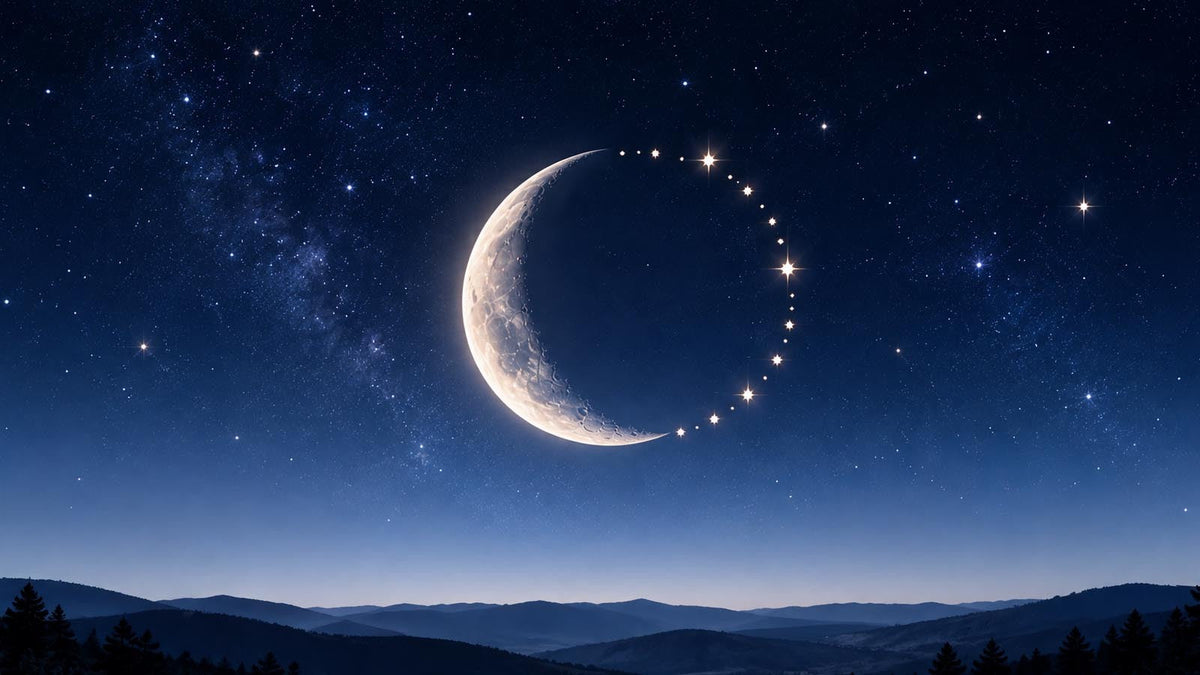
Let’s talk about the truth behind the full moon and how it really affects our lives here on Earth.
Most people working night shifts in the ER, psych unit, or labor ward would say a resounding “yes” if you asked whether full moons make their shifts busier. Some nurses even joke that they dread working full moon nights!
While some of these claims have a little truth behind them, they're probably not the ones most people expect! The moon has a large effect on our planet, but much less of an effect on our mood and hospital visits. When it comes to sleep, it’s somewhere in the middle.
Why the Full Moon Gets Such a Bad Reputation
The word “lunatic” comes from the Latin word luna, meaning moon. The lunar cycle has long been thought to influence our emotions and behavior. Many ancient cultures associated the moon with fertility, illness, change, and even madness. These beliefs are still present in modern medicine.
However, most large studies into hospital admissions, psychiatric episodes, births, and other medical events have not found a consistent link to full moons.
This is mainly due to something called confirmation bias. When you have an extremely busy shift and it happens to be a full moon, you will remember it! However, if you have a similar night during a half moon, you probably won't make the same connection. It's not that healthcare staff are imagining the busy times. They're just probably not caused by the moon.
The Moon Affects Our Oceans and Earth!
This is no myth.
Every day, the moon pulls on our planet, creating the tides we see along our coastlines. During full and new moons, the sun, Earth, and moon line up, creating “spring tides.” Spring tides have nothing to do with the seasons! They simply mean there is a larger difference between high and low tides.
What surprised me was that the moon also affects solid land. The moon and sun pull on the Earth's crust, causing slight movements known as Earth tides. We cannot feel this, but delicate instruments can detect the movement. Despite being approximately 239,000 miles away, the moon is still powerful enough to cause ocean tides and the Earth's crust to move.
Animals Following the Lunar Cycle
Many species follow the lunar cycle as part of their survival strategy!
Sea Turtles
Sea turtles use natural cues to help them travel between the ocean and their nesting areas. Hatchlings use the brighter open sky over the water to help them find their way to the sea. If there are artificial lights on the beach, they can become confused.
Although the moon can change the appearance of the beach at night, turtles have a complex navigation system. This is why many conservation groups encourage nesting areas to remain naturally dark.
Coral Reefs
Some species of coral all spawn at the same time. They use a range of cues, including the lunar cycle, water temperature, and season. They all release their reproductive cells in a very short space of time, meaning the water can look like it's snowing!
Scientists have discovered that some corals have light-sensitive systems that help them synchronize spawning with the moon.
Predators & Prey
During a bright full moon, some nocturnal prey animals will hide from predators because they become more visible. Some predators will take advantage of the extra light.
Researchers have found that some rodents, bats, birds, and aquatic animals change their behavior depending on the moon. However, this varies greatly depending on the species and the habitat they're in.
Birds & Fish
Some animals follow the lunar cycle when migrating, feeding, and breeding. Certain aquatic animals spawn during specific phases of the moon, while some nocturnal birds become less active depending on how much moonlight there is.
This isn't a myth. Animals have evolved to take advantage of a predictable cycle that has been around for billions of years.
Does the Full Moon Affect Your Sleep?
This is an interesting area of research because there actually is some evidence that the full moon can affect your sleep!
During full moons, people experienced less deep sleep and less sleep overall in a 2013 study published in Current Biology. This was a controlled study, which made researchers wonder whether we still have rhythms in our bodies related to the lunar cycle.
A study carried out in 2021 found that people in communities with less electric lighting tended to go to bed later and sleep less on the nights before full moons. This may be due to the extra natural light during the evenings. Before electric lighting, a bright moonlit night meant people had more time to be active after the sun went down.
However, some larger studies have found little or no meaningful link between moon phases and sleep. While there may be situations where the full moon affects sleep, the evidence is conflicting, and nobody has proved that it affects everyone in the same way.
Flares, Pain & Mood!
It's natural to look for patterns when you're experiencing unpredictable symptoms. Perhaps your fatigue feels worse some weeks, your pain flares feel cyclical, or your migraines, sleep issues, or mood changes seem to happen around full moons.
We definitely have rhythms in our bodies that are influenced by circadian rhythms, hormones, light, sleep quality, and our environment. Let's break down what we know!
Research has not established that full moons cause chronic illness flares, psychiatric episodes, or worsening symptoms. While the moon's gravity does cause tides, it doesn't pull on the water in our bodies in a way that causes illness or mood swings. The physics simply don't work that way!
However, the moon may have an effect on our sleep! Many of us with chronic conditions experience increased fatigue, sensitivity to pain, and other symptoms after a poor night's sleep. If you're experiencing disrupted sleep due to extra light or a change in routine, this could affect how you're feeling.
If you think you're noticing a pattern, try keeping a log of your sleep, symptoms, stress, medication, and anything else you think is relevant. Sometimes you'll notice a real pattern, and sometimes it will be down to coincidence. Either way, you'll have a better understanding of what's going on with your body.
Next Time You See a Full Moon...
The moon doesn't need to be controlling our behavior or causing mysterious ER rushes to be impressive. It influences the tides, the Earth's crust, how wildlife hunt and breed, and may even play a role in how some of us sleep. There's still a lot to discover, and it's exciting to watch!
Next time you see a full moon, take a moment to look up. Think about how it influences tides, coral spawning, and animals navigating the world around them. If you track symptoms/sleep in a journal/app, think about noting when it was the full moon.